Air Pressurization in Facilities versus Their Indoor Air Quality
Indoor air quality (IAQ) plays a critical role in the health and safety of a building's inhabitants. However, understanding how to properly control and monitor indoor air pressure is just as important. In this webinar, Eddie Kelly from Belimo will discuss pressurization and its influence on healthy IAQ. Eddie will explain the science and principles behind pressurization, review various applications, provide some control principles, and go over some important examples. Join us to learn about how to use pressurization to control IAQ levels and ensure a healthy and safe environment.
Understanding Indoor Air Quality is one of the most important topics related to air quality and pressure control. Indoor air quality (IAQ) is defined as the combination of temperature, humidity, air movements, smells, and concentrations of contaminants present in the air of a facility or space. All of these elements work together to produce the overall air quality of a space. Factors such as heating, ventilation, and air conditioning (HVAC) systems can also influence the quality of air.
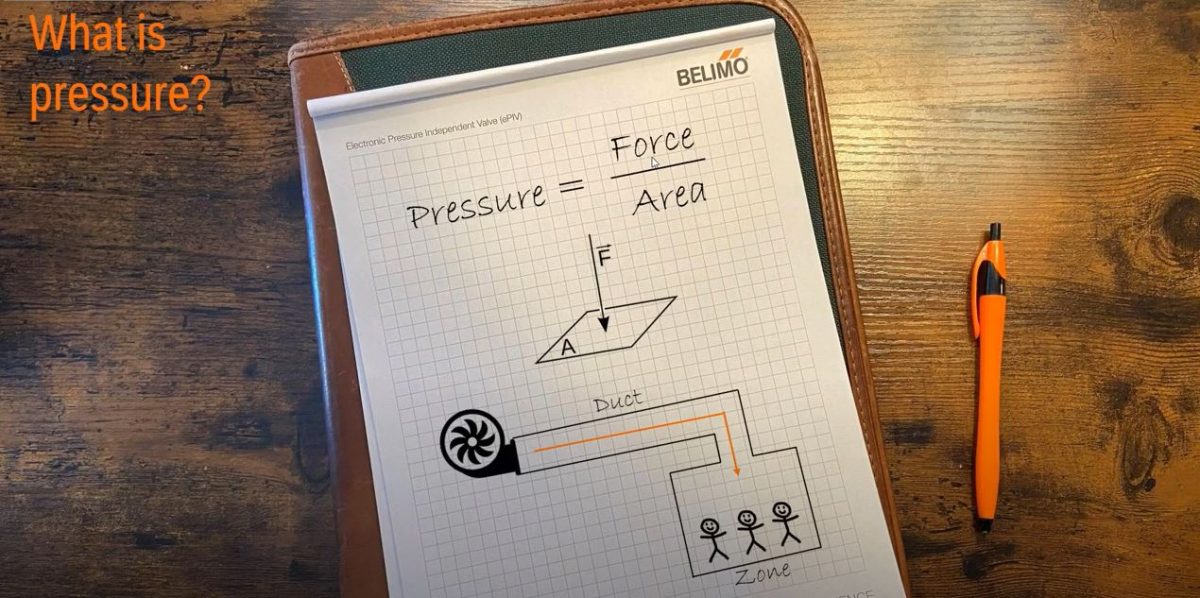
Understanding how pressure control works is one of the key elements in the pursuit of improved air quality. Pressure control is a process of adjusting the pressure inside an environment in order to maintain the desired air quality. It’s a way of monitoring and controlling air movement in buildings, spaces, and systems. Pressure control is often used for the management of HVAC systems to maintain air flow in the right direction and prevent particulates from entering the space. Pressure control can also be used to manage commercial and industrial ventilation systems for better performance, as well as to manage temperature, humidity, and other elements of air quality.
Thank you for joining us today as Eddie Kelly discusses pressurization and its influence on indoor air quality. Through this presentation, we now have a better understanding of the importance behind pressurization control, and how to use pressure sensors and control loops in facility applications. We hope you have gained valuable insight and can apply this knowledge when taking measures to better the indoor air quality. Thank you again for attending.